AeroAcoustics Research Consortium (AARC)
The AeroAcoustics Research Consortium is a partnership among NASA Glenn Research Center, Airbus, Honeywell, Pratt & Whitney, and Rolls-Royce, managed by OAI, designed to promote world-class aeroacoustics research and sustained interaction between researchers and consortium members.
Purpose and Mission
The AeroAcoustics Research Consortium (AARC) was established in 2001 by NASA Glenn Research Center and Industry partners with the goal of advancing the development of technologies for reducing the environmental impact of noise produced by commercial aircraft. Since that time, significant expansion of commercial air travel and revolutionary changes in flight systems and operations, combined with increased community engagement and national and international regulations, have only increased the demand for innovative approaches to controlling noise, which need to be made with the often-competing requirements of improving performance and reducing emissions.
Through its Advanced Air Vehicle Program (AAVP) NASA supports research aimed at evaluating and developing technologies for new aircraft systems and exploring far-future concepts for revolutionary improvements in air travel. The AAVP goal is to enable safer, more efficient, cleaner, and quieter air travel. Partnerships between government, industry and academia are critical to the achievement of this goal.
The AARC provides a collaborative environment for NASA and its Industry partners to engage with international researchers in aeroacoustics to work toward the elimination of technical barriers in the development of noise-reduction technologies, at a pre-competitive stage, for their mutual benefit.
Through research projects selected for funding by its members, the AARC provides a means for its partners to augment and complement their own in-house research and development efforts. These projects are structured to maintain a high level of engagement between funded researchers and AARC members, with regular status reports and presentations of results. In addition, as conditions permit, funded researchers are expected to spend brief time periods in residence at member institutions to directly transfer knowledge, expertise and research results to members’ technical staffs.
By pooling resources from Industry members’ financial contributions to fund these projects, AARC partners receive the potential for enhanced return on their investments. Sponsored researchers benefit from increased understanding of Industry needs in aeroacoustics and the development of relationships with leading practitioners in the field.
The Ohio Aerospace Institute (OAI) has served as the administrator and principal point of contact for the AARC since its inception. OAI is a non-profit research institution located in a Federal Opportunity Tax Credit Zone adjacent to the NASA Glenn Research Center (GRC). It was formed in 1989 as a joint initiative of NASA GRC and the Air Force Research Laboratory (AFRL) at Wright-Patterson Air Force Base with the aim of enhancing regional and domestic aerospace competitiveness through research and technology development, workforce preparedness, and engagement with global aerospace networks for innovation and advocacy.
Information for Researchers
Projects funded by the AeroAcoustics Research Consortium are selected based on technical proposals submitted by international researchers from academia, industry and government agencies. Researchers interested in submitting proposals to the AARC are encouraged to review the Proposal Guidelines document below for information on the current technical areas of interest to the Consortium and general instructions. Only pre-competitive (i.e. not company- or product-specific) research which will not result in technology subject to the International Traffic in Arms Regulations (ITAR) and Export Administration Regulations (EAR) under United States export control law will be considered. Proposals are continuously accepted and reviewed by the Peer Review Panel. It is requested that prospective proposers first submit a brief pre-proposal, describing their ideas and the potential impact of their work on noise-reduction technologies of interest to Consortium members. AARC projects are typically funded for one year with the possibility of additional follow-on work at the members’ discretion. It is requested, therefore, that pre-proposals include examples of specific of deliverables and estimated costs for a one-year effort along with any projected plans for a longer term. Examples of deliverables can be found in the Proposal Guidelines document below. Research participants are expected to engage in significant interactions with NASA and industry Consortium members during their funding period. This includes (when conditions allow) on-site visits to member facilities for direct interactions with their technical staffs and presentations of lectures and seminars with updates on project status. Proposed budgets should include these travel costs. After review of a submitted pre-proposal by the Peer Review Panel, researchers will be provided with feedback and guidance on whether to proceed with submission of a full proposal.
For additional information and to submit a proposal, please contact:
Dr. Stewart J. Leib
StewartLeib@oai.org
(440) 590 – 0831
Current Research Participants:
Dr. Brian Tester
Aeroacoustics Consultant
36 Seaway Avenue, Christchurch, Dorset, BH23 4EX
UK Tel: +44 1425 279544, Cell +44 7770210537.
e-mail: brian.j.tester@outlook.com
Dr. Tester has worked extensively on a wide range of theoretical and experimental aeroacoustics problems associated with aero engine noise. He received post-graduate degrees in Gas Dynamics and Aeroacoustics from Southampton University. He worked for six-years at Lockheed-Georgia Research Laboratories, but most of his professional career has been spent at Rolls-Royce in the UK, working on aero engine noise and also on the project management of R&T programs, including a number of major European collaborative research projects. He took early retirement from Rolls-Royce in 2002 and re-joined the ISVR, Southampton University where he worked as Principal Research Fellow until 2020. He now works as an independent Aeroacoustics Consultant. He has published over 50 technical papers. His current research interests include application of advanced measurement techniques to fan and jet noise and sound radiation through exhaust nozzles including shielding and tone haystacking. In 2012 he co-chaired, for the second time, an Independent Expert Panel that advised CAEP on the noise of future aircraft, which recommended an increase in stringency of 7 EPNdB (cumulative) relative to the current Chapter 4 levels. This recommendation was adopted by the ICAO Council as the new Annex 16, Vol I, Chapter 14 noise standard for jet and propeller-driven aeroplanes. He received the 2009 CEAS Aeroacoustics Award for ‘his pioneering contributions to the aeroacoustics of turbofan engine noise.
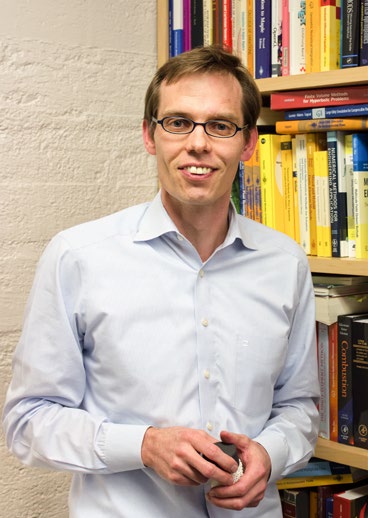
Dr. Matthias Ihme
Educational Background
• 2008: Ph.D., Mechanical Engineering, Stanford University, Stanford, CA
• 2002: M.Sc., Computational Engineering, Friedrich-Alexander University, Erlangen, Germany
• 2000: Dipl.-Ing. (FH), Mechanical Engineering, Munich University of Applied Sciences, Germany Professional and Research Experience
• Since 10/2021 Professor, Mechanical Engineering Department, Stanford University, Stanford, CA
• 08/2018 – 09/2021 Associate Professor, Mechanical Engineering Department, Stanford University, Stanford, CA
• 02/2013 – 07/2017 Assistant Professor, Mechanical Engineering Department, Stanford University, Stanford, CA Honors and Awards
• Friedrich Wilhelm Bessel Award of Alexander von Humboldt Foundation (2021)
• Research Excellence Award of The Combustion Institute (2020)
• Thermophysics Best Paper “Modeling Heatshield Erosion due to Dust Particle Impacts for Martian Entries” (AIAA 2020-0254)
• JSPS (Japan Society for the Promotion of Science) Fellowships for Research in Japan (2019)
• W. M. Keck Foundation Faculty Scholar, 2017-2021
• Mercator Fellow, 2017-2020
• Bernard Lewis Visiting Lecturer Fellowship, 2017
• Hiroshi Tsuji Early Career Researcher Award, 2017
• Distinguished Paper on Turbulent Flames, 36th International Symposium on Combustion, 2016
• Terman Faculty Fellow Award, 2013 – 2015
• NASA Early Carrier Faculty Award, 2015
• AFOSR Young Investigator Award, 2010
• ONR Young Investigator Award, 2010
• NSF Career Award, 2009
• Rackham Faculty Research Grant, 2009
• Academic Excellence Award, Munich University of Applied Sciences, 2000
• BMW Scholarship, 1995 – 2002 Research Interests
• Combustion noise and computational modeling of reacting flows
• Development of numerical methods, high-order schemes, and combustion modeling
• X-ray scattering and spectroscopy to study non-equilibrium processes
• Multiphase flows, high-pressure and supercritical flows, combustion and turbulence
Further Information: http://ihmegroup.stanford.edu
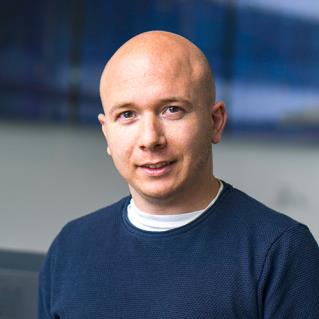
Dr. Francesco Avallone
Professor
Politecnico di Torino
Francesco Avallone is Full Professor in Fluid Dynamics at the Politecnico di Torino since May 2023. Previously, he was Tenured Assistant Professor at the Delft University of Technology, where he did also a two-years PostDoc. He received both his MSc and PhD degrees from the University of Naples Federico II. His PhD focused on non-intrusive techniques for boundary layer transition in hypersonic flows. Since 2015 he works in the field of Aeroacoustics. He has been awarded the ERC StG in 2022 to study the flow acoustic interaction over an acoustic liner. He has worked in several international and national projects and has been author and co-authors of more than 80 journal publications and 80 conference papers. He has been supervisor of more than 10 PhD candidates, 6 of them already obtained the PhD. His research interests are airfoil self-noise, rotor noise, acoustic liners, HVAC and fan noise. He is interested in both the physical understanding of the noise generation mechanisms and the development of novel noise reduction technologies. For his research he uses both experimental and computational techniques. A list of publications can be found here.
Prof. Julio A. Cordioli
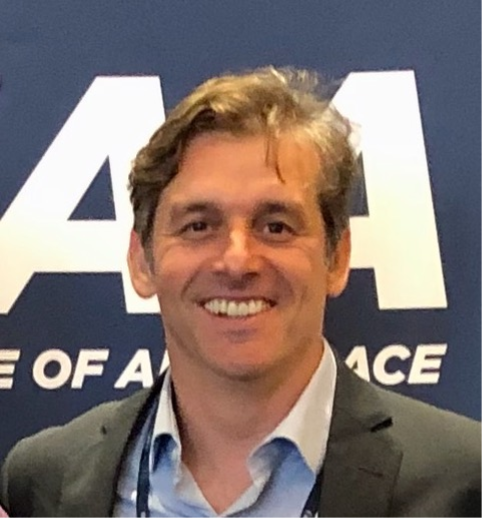
Prof. Julio A. Cordioli graduated in Mechanical Engineering from Federal University of Santa Catarina (UFSC), Brazil, in 2000 and received his PhD in 2006 also from UFSC, with part of his PhD research developed at the University of Cambridge, UK. He has previously worked for EMBRAER (Brazil) on the design of noise control treatments for aircrafts, and for the ESI Group (USA), as an acoustic scientist on the development of vibroacoustic numerical methods. Since 2011, he has been an Associate Professor at the Mechanical Engineering Department, UFSC. His main research interests include: numerical methods in vibro-acoustics, aircrafts interior and exterior noise, aeroacoustics and vibration monitoring.
Dr. Pieter Sijtsma
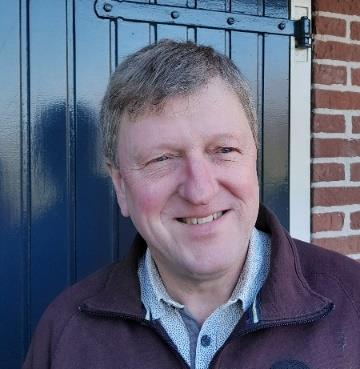
Kanaaldijk 20
9493 TE De Punt
The Netherlands
+31-6-43815222
pieter.sijtsma@psa3.nl
http://www.psa3.nl/
Research area
Aeroacoustic post-processing techniques applied to wind tunnels, aircraft engines, and wind turbines.
Career
Since 2015: Visiting researcher TU Delft, Faculty of Aerospace Engineering, ANCE group Since 2014: Private company: Pieter Sijtsma Advanced AeroAcoustics B.V. (PSA3) 1992 - 2014: National Aerospace Laboratory NLR, senior scientist aeroacoustics
Recent EU-projects
ADAPT, CIRRUS, AMICAL
Main research partners
Safran (FR), Deutsche WindGuard (DE)
Education
1987 - 1992 PhD Applied Mathematics, University of Groningen
Thesis: On the hydrodynamics of optimum sculling propulsion of ships and on the linearized lifting surface theory
1981 - 1987 MS Applied Mathematics (cum laude), University of Groningen
Awards
NLR “Dr.ir. B.M. Spee” Award 2006
CEAS Aeroacoustics Award 2024
Publications
See https://www.psa3.nl/publications-2/
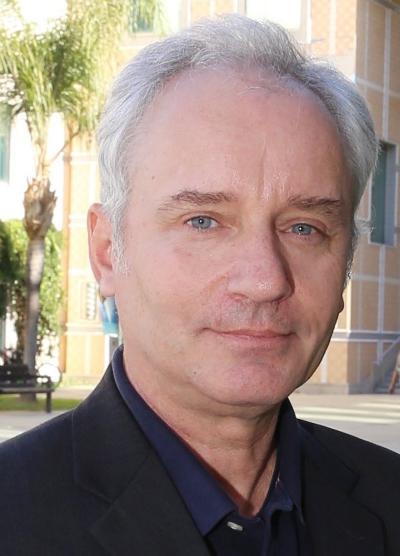
Dr. Dimitri Papamoschou
Chancellor’s Professor
Department of Mechanical and Aerospace Engineering
University of California, Irvine
Irvine, CA 92697-3975
USA
Tel: (949) 824-6590
Email: dpapamos@uci.edu
Web: supersonic.eng.uci.edu
Dr. Dimitri Papamoschou is Chancellor’s Professor in the Department of Mechanical and Aerospace Engineering at the University of California, Irvine (UCI). He obtained his Ph.D. degree in Aeronautics at Caltech in 1987; his thesis on supersonic shear layers illuminated for the first time the effect of compressibility on turbulent growth rate under a variety of freestream conditions. Upon joining UCI as a faculty member in 1988, he focused his research on the evolution of turbulent eddies in compressible shear layers, using advanced laser diagnostics, and developed correlations for the convective velocity that are widely used by researchers in the field. In the mid-1990s he got involved in the field of jet noise and built aeroacoustic facilities with multi-stream capability and phased array acoustical diagnostics. He developed and patented the fan flow deflection noise reduction method for turbofan engines and has collaborated extensively with NASA and industry on reducing aircraft noise. His work included the analysis of engine cycles for supersonic aircraft incorporating the noise reduction technology. More recently, Dr. Papamoschou has advanced new nozzle concepts for quiet three-stream jets, pioneered low-order methods for the prediction of noise from complex multi-stream jets, and formulated inverse acoustic methodologies that include the treatment of continuous-scan sensors. He developed a unique small-scale ducted fan rig that has been the basis of development of noise source models for emission from the outlet and the inlet, as well as modeling of propulsion-airframe integration. Dr. Papamoschou is a Fellow of the American Institute of Aeronautics and Astronautics (AIAA), recipient of the 2017 AIAA Aeroacoustics Award, and currently chairs the AIAA Aeroacoustics Technical Committee. He served as an Associate Editor of the AIAA Journal for 12 years and is currently member of the Editorial Advisory Board of the AIAA Journal. At UCI he has served in various administrative roles, including department chair, associate dean, and interim dean.
Past Research Participants:
• Dr. Daniel Bodony
• Dr. Sheryl Grace
• Dr. Fang Hu
• Dr. Sergey Karabasov
• Dr. Christopher Tam
• Dr. Krish K. Ahuja
• Dr. Hafiz M. Atassi
• Dr. Tim Colonius
• Dr. Robert Dougherty
• Dr. Stewart Glegg
• Donald Hanson
• Dr. Sanjiva Lele
• Dr. Anastasios Lyrintzis
• Dr. Ramani Mani
• Dr. Philip J. Morris
• Joseph Verdon
• Dr. Bruce Walker
Peer Review Panel
The Peer Review Panel consists of representatives from NASA, industry members, and OAI. The Panel’s NASA and industry representatives set the technical direction of the Consortium, prioritize its interests, and review and select projects for funding. Current members of the Peer Review Panel are listed below:
NASA
Dr. Edmane Envia, Acoustics Branch
NASA Glenn Research Center
21000 Brookpark Road
Mail Stop 54-3
Cleveland, OH 44135
Phone: 216.433.8956
Edmane.Envia-1@nasa.gov
Industry
 |  |  |
 |  |  |
More Information
For more information please contact: